Close Enough to Taste the Popcorn: Why the UK's Front Row Is Suddenly a Flex

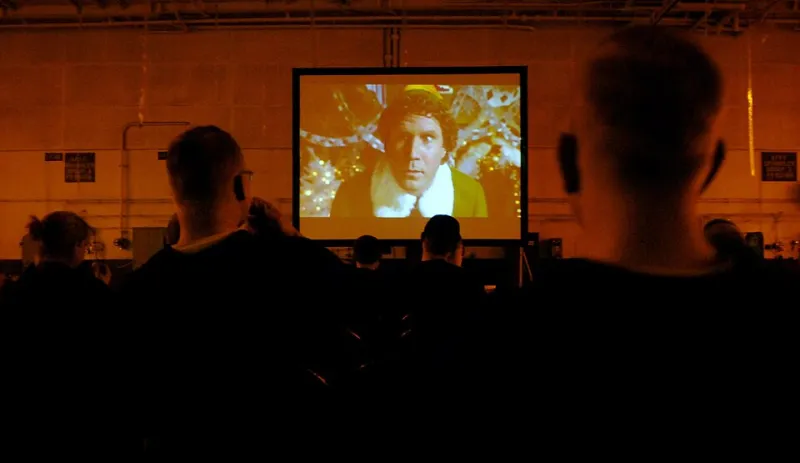
Photo: William Mewes from Oakville Ontario, Canada, CC BY 2.0, via Wikimedia Commons
For decades, the front row was the film equivalent of standing at the back of the bus. You didn’t choose it. You were assigned it after a late booking, a sold-out Saturday night or a group chat that couldn’t agree on anything until the only remaining block of four seats was practically touching the screen. Neck ache, looming close-ups and the faint fear that you’d have to do the hokey-cokey every time someone needed the loo — that was row A.
In 2026, something odd is happening. UK cinema-goers are booking the front row on purpose. Not as a dare, not as a last resort, but as a deliberate choice. On TikTok and Instagram, “front row gang” posts have become a low-key flex. On Letterboxd, users brag about feeling the bass in their ribs at the BFI IMAX. In group chats up and down the country, someone is now saying, “Actually, I prefer it up close.”
The old rule was less a rule than a warning
The “never sit up front” advice made sense for a long time. Older multiplex screens were not designed for intimacy. Sit too close and you’d spend two hours scanning the frame like a security camera, wondering why the hero’s chin had its own postcode. Add in a steep rake and a screen that started at eye level, and the front row felt like a punishment for poor planning.
But cinema design has changed. Recliner refits have softened the physical cost. Bigger screens — IMAX, Dolby Cinema, Vue Xtreme, Odeon Luxe’s larger houses — have changed the geometry. When the screen is enormous and the seating is tiered, the front row no longer means craning your neck at a telly that’s too close. It means the image filling your entire field of view. For certain films, that’s not a compromise. That’s the point.
Recliners, supersized screens and the immersion arms race
A recliner doesn’t fix everything, but it helps. Lean back far enough and the front row becomes less about looking up and more about being swallowed by the picture. UK venues have spent years upgrading seats, and the result is that row A is no longer automatically the cheap plastic chair of the cinema experience. In some sites, it’s a full recliner with a side table and enough legroom to stretch out.
Then there’s the screen. The release calendar in 2026 is packed with films that practically demand scale: blockbusters built for IMAX, horror films that rely on sound design, and event cinema that wants to overwhelm you. Sitting close turns a good screen into a wall of image. It can be exhausting. It can also be thrilling. The front row has become the cinematic equivalent of standing near the amps at a gig — you know it’s not the most balanced listen, but it feels like the band is playing just for you.
The spoiler-proof zone
There’s a more practical reason for the front-row revival: nobody is in front of you. That means no phone glow from the row ahead, no whispered plot explanation, no latecomer shuffling past with a tray of nachos. In an era when cinema etiquette feels permanently on edge, the front row offers a strange kind of control. You can’t stop the person behind you from kicking your seat, but you can remove an entire row of potential distractions from your eyeline.
It’s also a spoiler-proofing tactic. If you’re desperate to avoid trailers for the film you’re about to watch, sitting close means you’re in position early and less likely to be caught in the aisle during a crucial reveal. It’s not foolproof, but it feels like taking back a bit of control. For fans who have spent the past few years dodging TikTok clips and over-eager friends, that matters.
Seat maps, pricing and the new front-row flex
Cinema seat maps have become their own little game. Premium recliner rows are priced higher. Aisle seats go fast. The middle block is still the default choice for most bookers. But some UK operators have started to experiment with how they frame the front row. In certain sites, front-row seats are cheaper, presented as a value option rather than a punishment. In others, they’re marketed as “immersive” or “close-up” seats, especially in large-format auditoriums.
It’s not a universal shift. Many cinemas still treat row A as the leftovers, and plenty of film fans will never be persuaded. But the pricing experiments matter because they change the story. If the front row is cheaper, it becomes a smart budget move. If it’s rebranded as a premium experience, it becomes a statement. Either way, it’s no longer just the place you sit when you’ve left it too late.
Staff have noticed. A cinema worker in South London says front-row bookings are “no longer just the panic buys” on busy nights. A Manchester staffer says the same, adding that some regulars now ask for row A specifically for horror screenings because “they want to be jumpy before the film even starts”. Anecdotes aren’t data, but they do suggest a mood shift. The front row is becoming a personality test. Are you a middle-block comfort seeker or a row-A absolutist?
The catch: necks, sound and subtitles
The comeback comes with caveats. Not every screen is built for it. Older auditoriums can still turn the front row into a chiropractor’s advert. Sound mixing can be less balanced up close, with dialogue swallowed by effects and music. Subtitled screenings can be harder work if you’re too near the screen, especially when the titles sit low in the frame. And for anyone prone to motion sickness, a close-up IMAX screening is not a casual recommendation.
That’s why the front row isn’t for everyone, and why the old rule isn’t fully dead. It’s just no longer automatic. The smart move in 2026 is to check the venue, the screen type and the film before you commit. A front-row seat at a refurbished recliner site with a huge screen is a different proposition to row A in a tired auditorium with a screen the size of a bedsheet.
So is the rule finally dead?
Not quite. But it has been demoted from law to preference. The front row is no longer the place you end up; it’s the place some people choose. It’s where the immersion obsessives go, where the spoiler-avoiders hide, and where a growing number of UK film fans have decided that neck cramp is a fair trade for feeling like they’re inside the movie.
Book a middle seat if you want balance. Book the back if you want distance. But in 2026, don’t be surprised if the person next to you in row A is there on purpose — and quietly having the best time in the room.