House Lights Half Up: The Relaxed Screening Grows Up

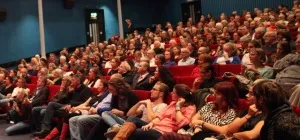
Photo: dimmed cinema auditorium audience relaxed screening UK, via i.ytimg.com
There is a particular kind of cinema hush that most of us know by instinct. The lights go down, the adverts stop, the room contracts into a shared black box, and everyone silently agrees to sit still. It is a lovely ritual. It is also, for a growing number of British cinema-goers, not the whole story. In 2026, the relaxed screening — once filed away under Sunday-morning family programming — is turning up in Friday evening slots, Saturday afternoons and even the odd midweek prime-time booking. The house lights stay half up. The sound comes down a notch. And the room, increasingly, is full.
The Sunday-Morning Assumption
For years, the relaxed screening had a reputation problem. It was understood as a concession: a quieter, gentler session for families with autistic children or audience members who found the standard cinema environment overwhelming. That work remains vital, and nobody is suggesting otherwise. But the scheduling told its own story. Sunday at 10:30am. Tuesday at 11am. A slot that felt suspiciously like the cinema was doing everyone a favour while the real business happened later.
What has changed in 2026 is the address. Relaxed screenings are appearing in the same listings blocks as mainstream evening shows, and not just at specialist venues. Odeon, Cineworld, Vue and Picturehouse sites have all been widening their relaxed offers, while independents from Leeds to Bristol are experimenting with later start times. The label varies — relaxed, autism-friendly, sensory-friendly, inclusive — but the room is broadly the same: lights dimmed rather than killed, volume softened, no trailers packed in before the feature, and an explicit promise that nobody will be shushed for moving, stimming, leaving and coming back, or making a bit of noise.
What Actually Changes in the Room
It is tempting to describe the relaxed screening as ordinary cinema with the edges sanded off. The reality is more practical. The house lights usually sit at a low glow rather than full darkness, so people can find their seats, read a snack packet or check a watch without a phone torch. The sound is trimmed — not so quiet that dialogue disappears, but enough that a sudden explosion does not feel like a personal attack. Trailers are often skipped or reduced, which means the film starts closer to the advertised time. Some venues publish a visual story in advance, showing the foyer, the screen and the toilets. Others allow re-entry, which sounds small until you remember how many cinema trips are quietly ruined by a mid-film loo dash.
None of this is a free-for-all. The best relaxed screenings are still screenings: the film matters, the audience is there to watch it, and the atmosphere is not a crèche. The difference is that the room has stopped treating every flicker of movement as a disciplinary matter.
Who Is Booking — and Why It Is Not Just Families
Here is the interesting bit. Cinemas running these sessions in 2026 report a broader crowd than the old Sunday-morning model suggested. Yes, there are families for whom a standard screening is a gauntlet of shushing and side-eye. But there are also adults who find the usual volume physically uncomfortable, film fans who want to see a new release without three rounds of trailers, and older audience members who appreciate being able to slip out without causing a scene. There are people with anxiety, migraine sufferers, and the simply tired — the Friday-night crowd who want the film without the full sensory assault.
That last group is worth noting. The relaxed screening has picked up a quiet following among cinema-goers who do not identify as disabled or neurodivergent but who have realised that a half-lit auditorium is a more civilised place to spend two hours. It is not about avoiding the film. It is about avoiding the performance of perfect spectatorship that ordinary screenings sometimes demand.
The New Etiquette of the Half-Lit Screen
The rise of the relaxed screening says something about modern cinema etiquette, and not all of it is comfortable. The standard auditorium has become a strange place: phone screens flare in the dark, whispered conversations carry, and yet a child rocking in a seat can draw a glare. Relaxed screenings invert that hierarchy. They make the rules explicit — move if you need to, keep the noise reasonable, look after your own party — and in doing so they take the guesswork out of the room.
That clarity is appealing. It also raises a question for the rest of the schedule. If a half-lit, lower-volume screening can work at 7pm on a Friday, why is the standard show still built around total darkness and maximum trailer volume? Nobody is asking every screening to become relaxed. But the success of these sessions suggests that the old binary — silent and strict, or chaotic and unwatchable — was always a bit false.
What Cinemas Get Out of It
For exhibitors, the appeal is obvious enough. Relaxed screenings fill seats in slots that might otherwise sit quiet, and they build loyalty with audiences who have long felt priced out of the ritual. They also fit neatly with the broader 2026 push toward eventised cinema: a screening with a clear identity is easier to market than another anonymous 8:15pm showing. Independents have been especially nimble, pairing relaxed sessions with quieter cafés, lower-capacity screens and staff briefings that actually explain what the session is for.
The catch is that relaxed programming only works if it is done properly. A half-hearted version — lights up, sound down, no other thought — can feel like a fob-off. The venues getting it right are the ones treating it as a genuine mode of exhibition rather than a box-ticking exercise.
The Verdict
The relaxed screening has grown up. It is no longer a Sunday-morning apology or a niche add-on; in 2026 it is becoming part of the regular rhythm of UK cinema, and audiences are responding. The half-lit auditorium is not a lesser version of the movies. Done well, it is one of the most civilised tickets in town — a reminder that a shared room does not have to be a silent one to be full of attention.